Recently, Hong Kong has seen a series of animal cruelty cases involving minors. With a concerning trend of suspects getting younger, society is facing a dilemma between “protecting minors” and “punishing crimes.” These incidents not only highlight the harm inflicted on innocent animals but also prompt the public to re-examine whether our current educational and legal frameworks can effectively address minor-related offences. By reviewing these recent cases, this article aims to explore the different perspectives and societal concerns regarding the underlying systems.
Case 1: An 8-Year-Old Boy Scalding a Red-Eared Slider Turtle
On March 2, a boy poured boiling water over his family’s pet red‑eared slider turtle and excessively trimmed its nails, resulting in severe burns, blistering, skin sloughing, a fractured tail, and bleeding from its claws. During and after the incident, the boy’s family did not intervene to stop these actions, nor did they arrange appropriate veterinary treatment for the turtle. Due to the severity of its injuries, the turtle was ultimately euthanised three days later. The police have classified the case as “cruelty to animals” and have launched an investigation. No arrests have been made so far.
Some observers believe that an eight‑year‑old child may still be in a developmental stage in understanding life and pain, making appropriate adult guidance especially critical. The family’s response to the incident may reflect a lack of education within the household regarding empathy and respect for life.
Case 2: A 14-Year-Old Boy Identified as the “Mastermind” of a Cross-Border Cat Abuse Ring
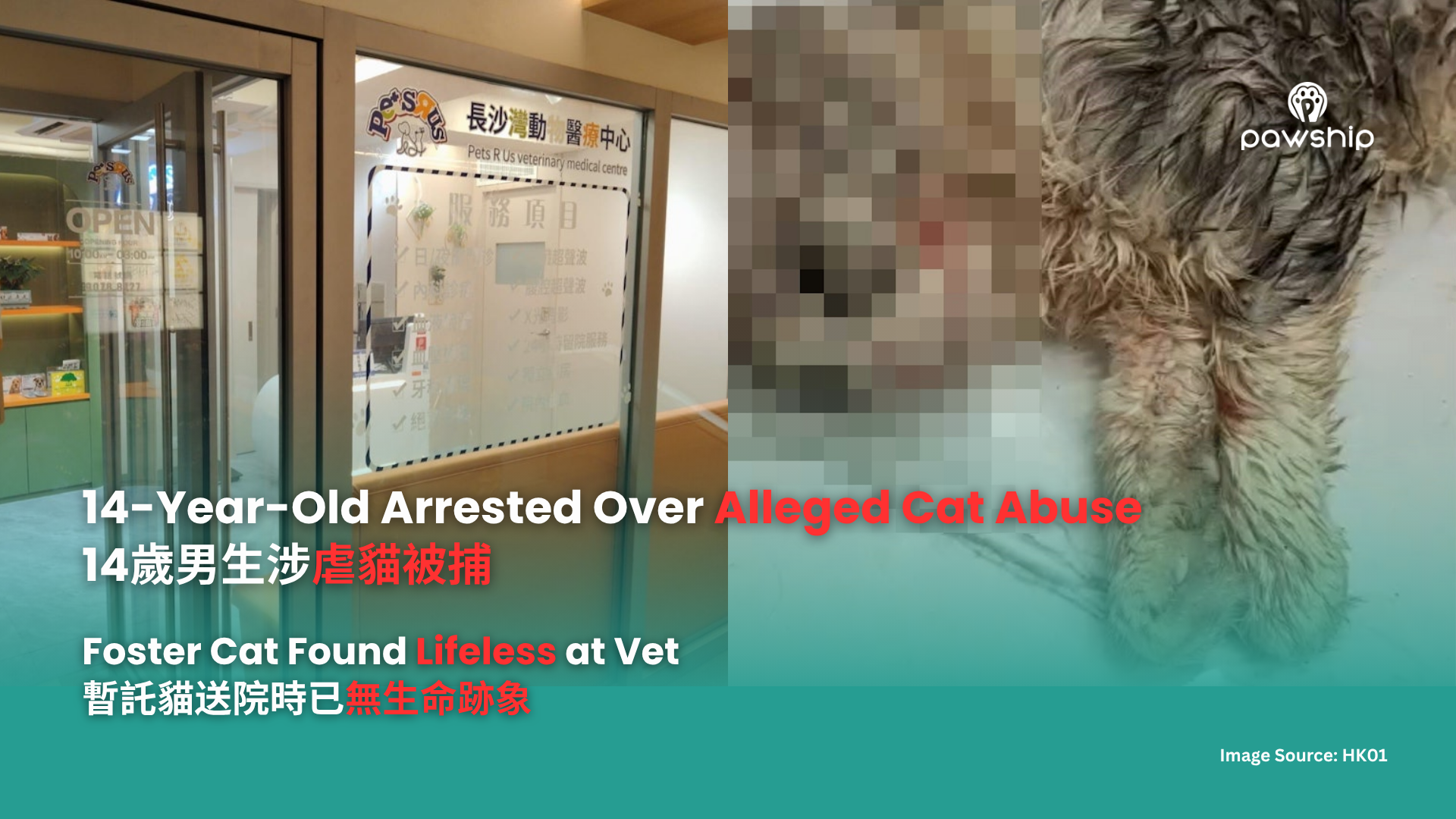
Not long ago, a 14‑year‑old boy studying at a local government secondary school was arrested by Hong Kong police on suspicion of “cruelty to animals.” According to information circulating online and police investigations, the boy is alleged to have acted as a behind‑the‑scenes organiser on online platforms such as WeChat and Douyin groups, where he incited minors in mainland China to torture, kill, and even sexually abuse cats. He is also accused of distributing graphic videos, instructing group members on how to evade legal responsibility, and doxxing animal welfare volunteers.
This case reflects the awkward predicament of the current legal framework. Cross‑border cybercrimes complicate law enforcement efforts, and when the suspect is a minor, the situation becomes an even greater practical dilemma—caught between issues of cross‑border jurisdiction and the age of criminal responsibility.
Reflections on Life Education and the Legal Framework
Animal abuse (such as cat abuse) committed by adults is often associated with the exertion of power and a desire for control, serving as a distorted outlet for stress and emotional distress, and may even be linked to antisocial personality traits. In contrast, cruelty towards animals by minors more commonly stems from a lack of understanding of life, pain, and death. Such behaviours can be driven by misguided curiosity, or reflect a lack of care in upbringing, as well as a blind imitation of violence witnessed online, at schools, or within the family.
When there are gaps in family supervision and life education, combined with legal limitations of cross‑border jurisdiction and the age of criminal responsibility, these cases raise questions and concerns about society’s and the legal system’s stance and boundaries in protecting minors. They prompt us to re‑examine how the existing system can be further improved, to achieve a better balance between educational guidance and legal accountability.