A Dog Slaughterhouse Closes Before Yulin
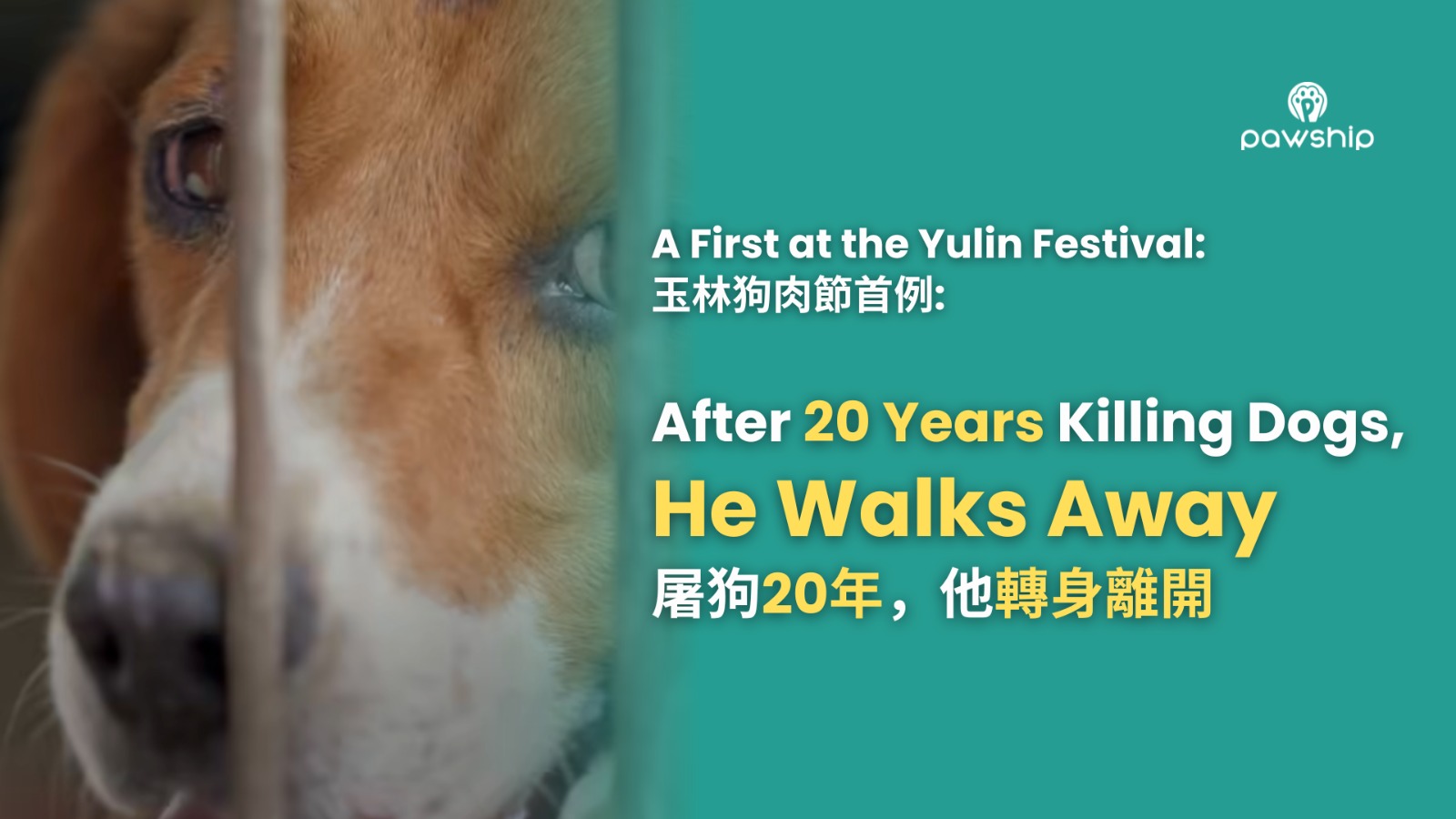
Just days before the controversial Yulin dog meat festival, a local slaughterhouse in southern China has permanently shut down. With the support of animal advocates, its owner has exited the dog meat trade and is transitioning to running a breakfast stall.
This is the first known case in Yulin of a dog slaughterhouse closing through a livelihood conversion program, offering a potential model for reducing the trade without leaving workers economically stranded.
A “Dirty Business” in Decline
Operating under the pseudonym Huang, the owner had reportedly slaughtered more than 15,000 dogs over nearly 20 years, supplying meat to local restaurants and markets. Like many in the trade, his income relied heavily on the annual Yulin festival, with June accounting for 70% of his annual revenue.
Despite this, Huang described the industry as a “dirty business” and pointed to declining demand as a key reason for leaving.
With support from China’s Vshine Animal Protection Association and the international charity Humane World for Animals, Huang is now considering setting up a breakfast stall selling rice porridge, steamed buns, and fried dough.
“Leaving the trade for a more stable income was a relief,” Huang said, adding that he hopes to live a more peaceful life.
He also suggested that other traders in Yulin might be willing to exit the industry if viable alternatives were made available.
Rescued from the Slaughterhouse
Following the shutdown, nine dogs were rescued from the premises. Three of the dogs were still wearing collars, highlighting concerns raised by activists that parts of the trade rely on stolen or stray animals.
The rescued dogs have since been transported to a shelter in Beijing, where they will receive vaccinations and sterilisation before being made available for adoption.
The Yulin Festival and Changing Attitudes
Held annually in late June in Guangxi Zhuang autonomous region, the Yulin dog meat festival has become a flashpoint for international criticism.
Contrary to common belief, the event is not an ancient tradition. It was launched in 2010 as a commercial campaign to boost dog meat sales. The festival typically spans about 10 days and involves the slaughter of an estimated 3,000 dogs and has drawn widespread criticism over animal welfare concerns.
Julie Sanders, director of Humane World for Animals’ End Dog and Cat Meat campaign, shared that, contrary to international perceptions, most Yulin residents do not eat, buy, trade-in, or support dog meat.
A Shifting Landscape
China has seen gradual regulatory and cultural changes in recent years. In 2020, the government removed dogs and cats from the country’s livestock catalogue, and cities such as Shenzhen and Zhuhai have implemented local bans on their consumption.
This case demonstrates that transition programmes can play a critical role in reducing the dog meat trade.
By providing alternative livelihoods, such initiatives may help more traders walk away—gradually shrinking the industry from within.