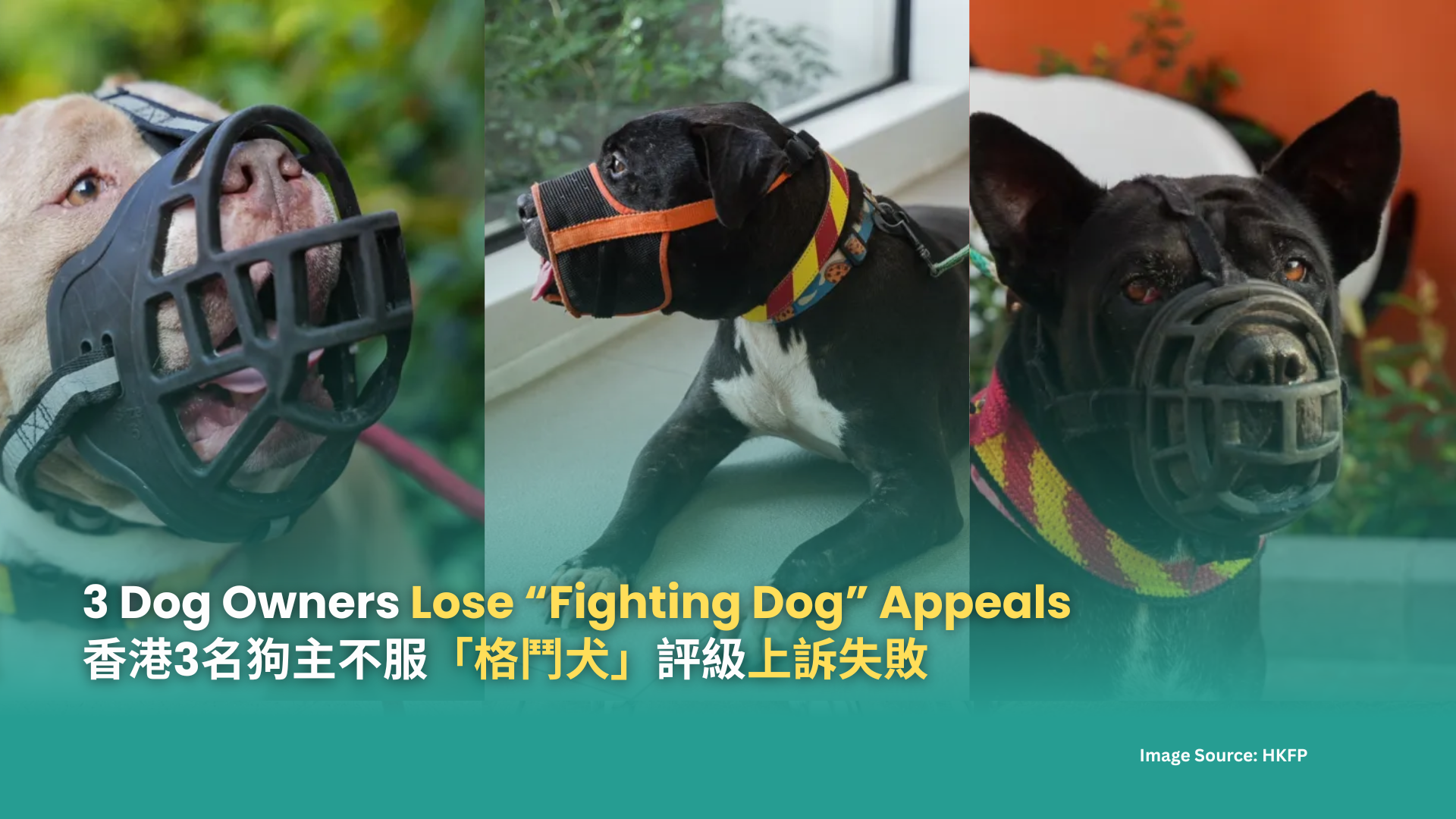

A series of recent dog attack incidents in Hong Kong, including the fatal dog attack in Ping Yeung Village, Ta Kwu Ling, and the dog-on-dog attack at YOHO in Yuen Long, have reignited public debate over the city’s dog regulation framework.
In response, the Agriculture, Fisheries and Conservation Department (AFCD) has stepped up enforcement of the Dangerous Dogs Regulation, carrying out investigations and classification assessments on dogs suspected of falling within the legal definition of fighting dogs. This move has raised concerns among some dog owners and animal welfare advocates.
In a recently issued document, the AFCD reiterated that the American Pit Bull Terrier, American Staffordshire Terrier, and American Bully have long been regarded as common breeds within the legal “Pit Bull Terrier” category, stressing that neither the relevant policies nor the legal definitions of fighting dogs has changed.
However, the department’s reliance on physical characteristics and appearance to identify dog types has sparked debate among veterinarians, dog owners, and animal welfare groups over the scientific basis and consistency of the current assessment process.
Breed Identification Under the Spotlight as Lawmaker Proposes Photo Records and DNA Support
The issue came into sharper focus following the fatal dog attack in Ping Yeung Village. Although the dog involved had been registered as a mongrel in its microchip records, the AFCD later confirmed that it possessed fighting dog lineage.
Chan Pok-chi, a Legislative Council member for the Agriculture and Fisheries sector, noted that the current dog licensing database does not include photographs of licensed dogs. He suggested that photo records should be introduced during license renewals to facilitate future identification.
Chan also proposed exploring scientific methods, such as DNA testing, in cases where a dog’s breed classification is disputed. He believes DNA analysis could provide additional information on the proportion of fighting dog ancestry in mixed-breed dogs.
The AFCD stated that the current international practice for identifying fighting dog types is based primarily on assessing a dog’s physical appearance, features, and physique, examining the shape of the head, nose, mouth, and jaw structure. According to the Department, genetic testing is not considered the best method for identifying fighting dogs, as dogs carrying relevant genes may not necessarily display the physical traits associated with fighting dog types. As a result, current assessments continue to rely primarily on physical and morphological characteristics
Animal Welfare Groups Report Rise in Abandonment Cases, Call for Grace Period
Lau Chun-hoi, convener of the Animal Welfare Advocacy Alliance, said the number of pet abandonment cases received recently has increased by approximately 50% compared with the previous month, reflecting growing anxiety among some dog owners following the latest enforcement actions.
Lau cited a case involving a dog owner voluntarily bringing a dog to the AFCD for vaccination. According to him, former members of the Dogs and Cats Classification Board had reviewed photographs of the dog and believed it resembled a Shar Pei, which is not a dangerous breed. However, after seeing the dog, AFCD classified it as a fighting dog and did not allow the owner to take it home. Ultimately, the owner chose to abandon the dog.
Lau suggested the AFCD to introduce a grace period, allowing owners to bring their dogs in voluntarily for breed assessment and clarification.
“Bao Bao” and “Baku” Cases Draw Public Attention
Two of the the most widely discussed cases involve “Bao Bao,” a 10-year-old dog in Stanley, and “Baku,” an 8-year-old rescued dog. Both were taken by the AFCD for assessment after concerns were raised over possible fighting dog lineage.
Their owners criticised the department’s handling of the cases, claiming the dogs were classified as having fighting dog characteristics for merely “taking a quick look” upon arrival, without blood tests or other scientific assessments. In Bao Bao’s case, the owner said an urgent neutering procedure was arranged, despite the dog’s advanced age, in order to satisfy legal requirements and secure the dog’s return.
The AFCD has rejected suggestions that classifications are made based solely on casual observation. The department emphasised that, where there are reasonable grounds for suspicion, authorised officers have statutory powers to remove dogs for professional assessment, which is conducted by veterinarians rather than frontline staff alone.
The department also noted that owners who disagree with a classification decision may lodge an appeal with the Dogs and Cats Classification Board within the prescribed statutory period.
AFCD Director Leung Kin-ming added that, in several recent high-profile cases, officers first communicated with owners before arranging inspections, and that some owners had voluntarily brought their dogs to Animal Management Centres for assessment.
AFCD: 34 Licensed Fighting Dogs Currently Kept in Hong Kong
As of early September, the AFCD said there were 34 legally licensed fighting dogs in Hong Kong. Over the previous two weeks, six additional cases had been assessed and confirmed as fighting dogs.
The department noted that recent increases in inquiries and reports reflect heightened public concern over safety, but they do not believe the rise in reports is driven by malicious or abusive complaints.
Calls for Action Against Smuggling and Progress on Animal Welfare Legislation
Animal welfare groups believe that to address the issue of dangerous dogs requires action at the source. They have urged the government to strengthen efforts against illegal dog smuggling while accelerating work on the proposed “duty of care” provisions under Hong Kong’s Animal Welfare legislation.