
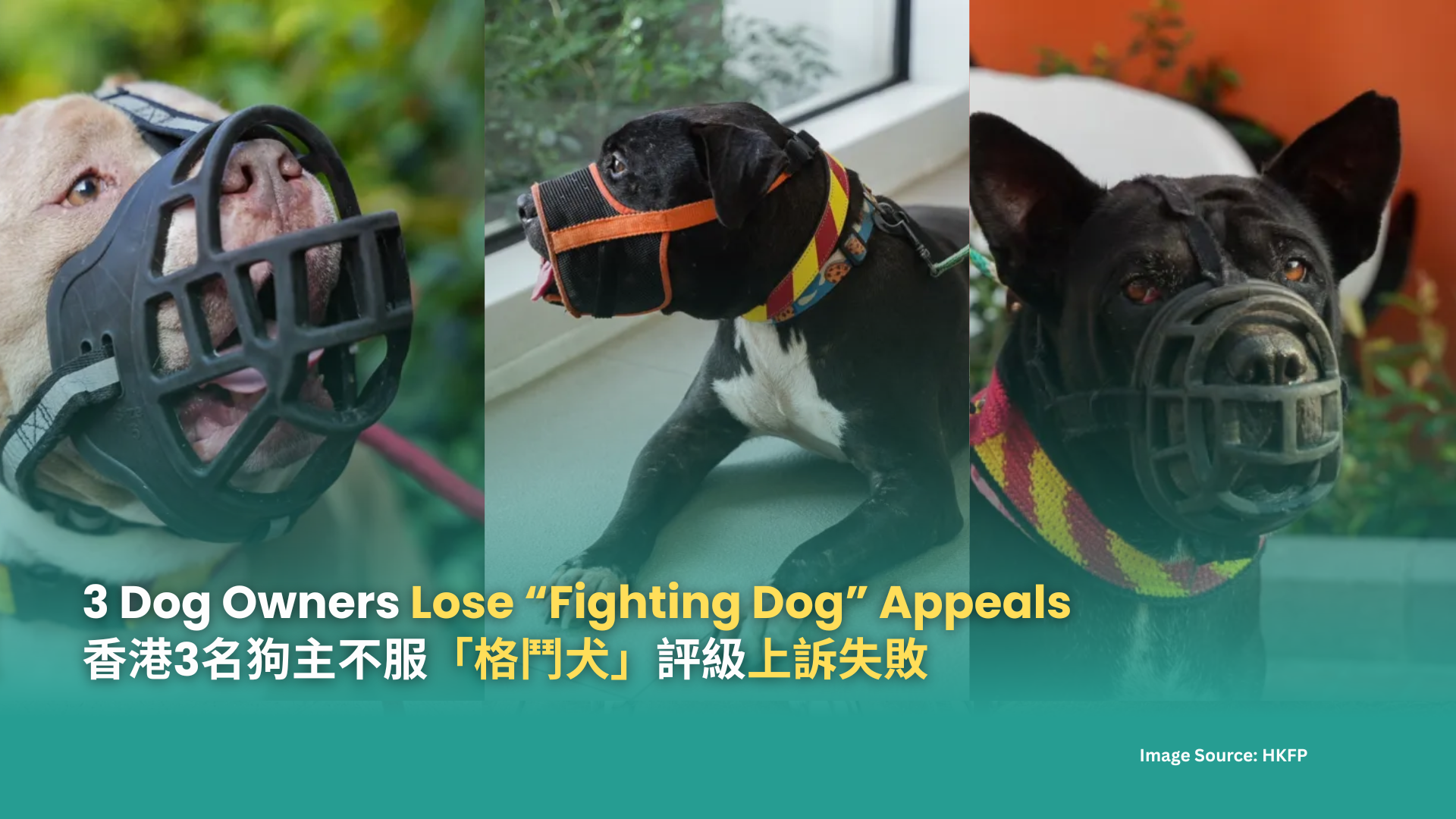
Following a series of high-profile dog attacks that have raised public concern in Hong Kong, the Agriculture, Fisheries and Conservation Department (AFCD) has stepped up enforcement of regulations relating to “fighting dogs.” Three dog owners appealed against the department’s decision to classify their pets as fighting dogs, but all three appeals were ultimately rejected. One animal shelter founder criticised the classification process as “unscientific” and lacking credibility.
AFCD Tightened Regulations Following Fatal Dog Attacks
Between August and September, several dog-related incidents drew widespread public attention in Hong Kong. In August, a large dog reportedly identified as a Spanish mastiff killed two smaller dogs in two separate attacks in Yuen Long. That same month, a female employee at a dog shelter in Ta Kwu Ling died after being attacked by a dog that the AFCD later classified as a fighting dog.
In September, a woman died while cycling at night in Yuen Long in a suspected dog attack. According to police, CCTV footage showed three dogs chasing her shortly before the incident.
The AFCD said that since August 20, it has identified seven dogs as fighting dogs. Under current regulations, dogs classified as fighting dogs must wear muzzles in public and are prohibited from entering pet-friendly restaurants and certain other venues. The classification criteria and enforcement approach have since become the subject of debate among dog owners and animal welfare advocates.
Three Appeals Cases Raise Questions Over Classification Standards
Bao Bao: Community Support Fails to Overturn Decision
Dog owner Mr. Ho said his pet Bao Bao was originally licensed as a Staffordshire Bull Terrier. However, after being taken away by AFCD officers at a cafe in Stanley last month, the dog was reclassified as a Pit Bull Terrier, one of Hong Kong’s four legally recognised fighting dog types.
The AFCD maintains that the Staffordshire Bull Terrier falls within the Pit Bull Terrier category. During the appeal hearing, Mr. Ho presented messages of support from Stanley residents describing Bao Bao as a friendly and gentle dog. However, the appeal board upheld the original classification.
Bowie: Shelter Founder Calls Process “Unscientific”
Jacqueline Cheung, founder of the non-profit Love Adopt Animal Society, is currently caring for Bowie after the dog’s previous owner surrendered her following her classifications as a fighting dog. Bowie had originally been licensed as a Sharpei.
Cheung argued that Bowie displays clear Sharpei characteristics, including the breed’s distinctive bristle-like fur and fleshy muzzle. She said the appeal board failed to address these points and described the process as “unscientific”, lacking credibility, and difficult to understand.
She also expressed concern that the fighting dog designation could significantly reduce Bowie’s chances of being adopted in the future.
Baku: Eight-Year-Old Mongrel Also Loses Appeal
Another dog owner, Mrs. Lai attended the hearing alongside her husband and a lawyer. About four years ago, she adopted Baku, an eight-year-old dog licensed as a mongrel.
In late August, the AFCD removed Baku from her home after receiving a report concerning a “suspected unregistered fighting dog.” The appeal board ultimately upheld the department’s earlier decision and maintained Baku’s fighting dog classification.
Breed-Based Classification Sparks Debate
Responding to criticism, the AFCD has defended its approach. The department said fighting dogs may attack without warning because of their characteristics and argued that their strong musculature, powerful jaws, and persistent biting tendencies can result in more severe injuries when attacks occur.
However, some veterinarians have questioned the AFCD’s use of breed as a determining factor when assessing a dog’s potential danger, arguing that breed alone may not accurately reflect the behaviour or risk level of an individual dog.
Under Hong Kong’s current system, dog owners who disagree with a fighting dog classification may file an appeal within 14 days. According to the AFCD, the appeal board includes veterinarians, dog breeders, academics, and representatives from animal welfare organisations.