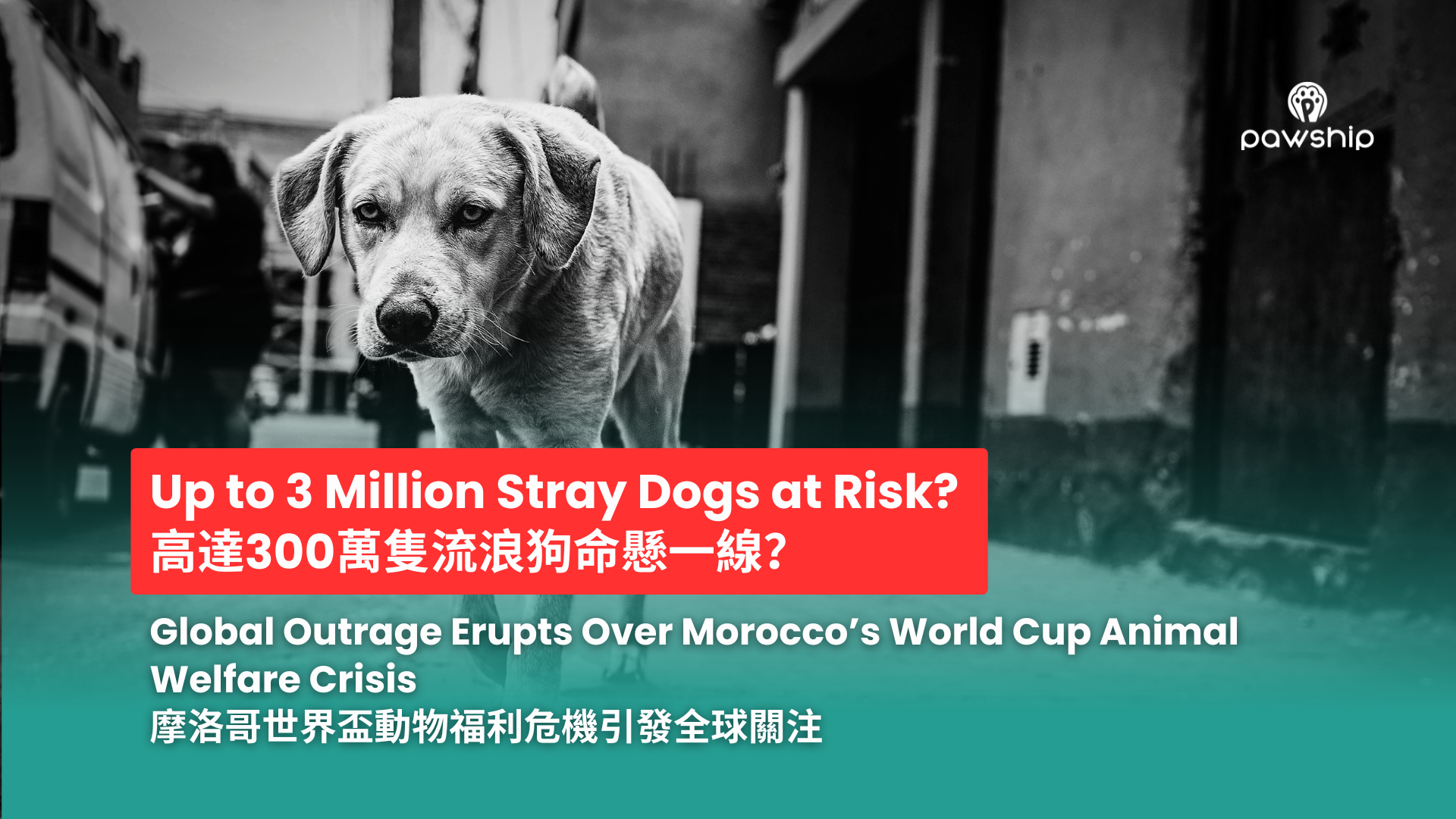
The issue of Morocco’s stray dog population has escalated into a global controversy ahead of the country’s role as co-host of the 2030 FIFA World Cup. Animal welfare organisations warn that millions of street dogs—often cited as up to three million—could be at risk in government efforts to “clean up” cities and tourist hotspots ahead of the global tournament.
Advocacy groups, including the International Animal Welfare and Protection Coalition (IAWPC), allege that lethal control methods—such as shooting and poisoning—have intensified in certain areas. However Moroccan authorities deny any claims to cull millions of stray dogs, stating instead that the country is committed to humane and sustainable animal management.
A Timeline of Claims, Policies, and Disputes
Tensions stem partly from contrasting narratives about Morocco’s animal control policies. The timeline of responses reveals a stark contrast between official promises and on-the-ground reality:
- Pre‑World Cup: During the bidding process for the 2030 FIFA World Cup, Morocco emphasised its commitment to animal welfare, with efforts to expand veterinary clinics and support programs for stray dogs.
- Government policy: The Moroccan government has consistently framed stray dogs management as a matter of public health and safety, particularly in relation to rabies prevention. While authorities maintain that their approach prioritises humane solutions and deny the claims of culling stray dogs, IAWPC claims that 300,000 animals were being killed every year through lethal methods prior to the World Cup announcement.
- Recent allegations: In the leadup to the 2030 tournament, animal welfare groups have alleged a significant escalation in dog‑control operations, particularly in cities expected to host matches. According to animal welfare advocates, these operations have involved practices such as:
- Rounding up dogs and transporting them in white vans to facilities where they are inhumanely killed
- Poisoning (including alleged use of strychnine)
- Shooting campaigns
- Reports of starvation and other forms of mistreatment
- Ongoing dispute: To demand accountability, IAWPC have compiled photographs, documenting poisonings, forced starvation, and the shooting of dogs into a 91-page dossier, which was formally submitted to FIFA.
In response to the growing pressure, FIFA has said it is working with animal welfare groups and Moroccan authorities, and that it is following up with its local counterparts’ to ensure commitments made during the World Cup bidding process are upheld, although it has not publicly condemned the alleged killings.
Welfare Organisations and Celebrity Outcry
Animal welfare groups have condemned the alleged killings. The IAWPC—representing more than 80 organisations—blasted the recent killings, with Chairman, Les Ward MBE stating that “These killings are taking place every single day, in full view of children, tourists, and local communities.” and that “They make claims that have no basis in reality, including that the killing has ended, when every Moroccan knows it is happening every single day.”
High-profile figures have amplified these concerns. In February 2026, Oscar nominated actor Mark Ruffalo publicly supported the campaign, urging authorities and FIFA to prioritise human solutions: “Killing millions of dogs to prepare for a global sporting event is not progress—it’s a moral failure.”
His intervention significantly increased global visibility and public engagement with the issue.
The Role of Advocacy Campaigns and Petitions
The controversy has triggered a wave of international petitions and campaigns targeting FIFA, the Moroccan government, and associated stakeholders.
- A Unified Global Response: A coalition led by the IAWPC has helped elevate the issue from a local concern to an international campaign.
- Accountability from Stakeholders: Petitions and campaign materials primarily target the Moroccan government and FIFA to take action, urging them to halt the alleged killings and ensure animal welfare commitments are upheld.
- Pressure on Hosting Status: PETA entities worldwide have protested at FIFA events, with tens of thousands urging FIFA to reconsider Morocco’s co‑hosting role unless the killings stop.
- Implementation of Humane Solutions: The IAWPC has offered to support Morocco in implementing large-scale Trap‑Neuter‑Vaccinate‑Release (TNVR) programmes, but claims these offers have gone unanswered.
As the 2030 World Cup approaches, the spotlight on Morocco now reaches beyond stadiums to a deeper ethical question: how a host nation balances progress with compassion. With millions of stray dogs at the center of a debate, this issue has become a defining test for both Morocco and FIFA. Its outcome will not only shape the fate of countless animals but may also set a lasting standard for the moral responsibilities tied to global sporting events.
Whether global pressure can successfully enforce change remains to be seen, but the world is undoubtedly watching.