
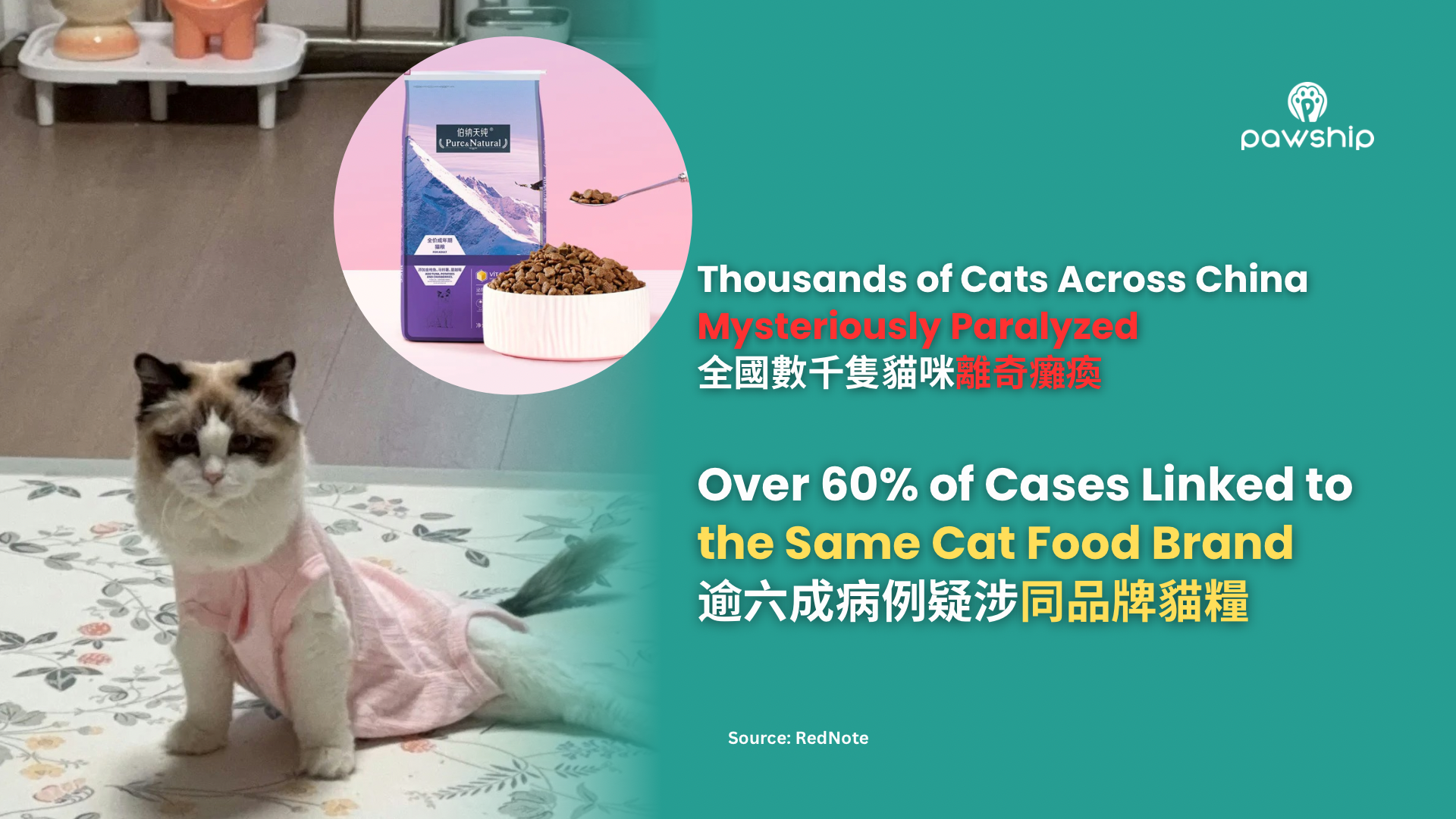
In recent years, China’s pet economy has experienced rapid growth. According to the 2026 China Pet Industry White Paper, the urban pet consumer market reached RMB 312.6 billion in 2025. Alongside this expansion, concerns over pet food safety have also attracted increasing public attention.
Recently, cat owners from multiple regions across China have reported that their pets suddenly developed symptoms such as hind-limb weakness and even paralysis. As more similar cases have surfaced, the issue has sparked widespread concern among cat owners. Among the brands most frequently mentioned by affected owners is the domestic premium pet food brand—Bona Tianchun.
Cats Developing Paralysis Symptoms; Veterinarians Recommend Changing Food
In March this year, pet owner Li Lan noticed that her 12-year-old cat suddenly developed weakness in its hind legs and began walking with a limp. At first, she assumed the cat had suffered a minor injury while jumping. However, the condition gradually worsened. Eventually, the cat lost the ability to move both hind legs, could only drag itself forward using its front limbs, and later developed incontinence.
Li eventually travelled with her cat to a specialised veterinary neurology hospital in Shanghai, where veterinarians likewise suggested that the cat food was likely the cause of the problem.
A similar situation was reported by Lu Xiaoxiao, a cat owner in Chengdu. Within just four months, three of her Ragdoll cats developed hind-limb paralysis symptoms one after another. Medical examinations found no obvious abnormalities, and treatment for neurological feline infectious peritonitis (FIP) failed to improve their condition.
It was only after she brought her cats to a well-known local animal hospital for acupuncture therapy that she discovered numerous cats at the clinic were exhibiting similar symptoms. After learning that her cats had been eating Bona Tianchun cat food for eight years, veterinarians recommended changing their food as part of the effort to investigate potential causes.
As similar cases have continued to be reported in recent years, some veterinary clinics have even informally referred to these unexplained cases of hind-limb paralysis as “Bona Paralysis.”
What is “Bona Paralysis”? Similar Symptoms Reported Across Many Cases
According to affected pet owners, many cats appear to follow a similar progression of symptoms:
- Hind-limb weakness, limping, and an unsteady gait.
- Gradual deterioration, with the hind legs becoming increasingly difficult to move.
- Severe cases, in which cats can only crawl using their front limbs.
- Incontinence, with some cats eventually losing bladder and bowel control.
Approximately 5,000 Suspected Cases Reported; 65.58% Had Consumed Bona Tianchun
After her own cat recovered, pet owner Li Saifei established several online support groups for owners of cats suffering from hind-limb paralysis. The groups were created to share treatment experiences and collect case information.
According to Li, the various communities are believed to involve around 5,000 affected cats nationwide.
Based on an analysis of approximately 1,000 reported case collected through October 2025:
- 65.58% of affected cats had consumed Bona Tianchun cat food.
- 24.60% had consumed Frigate cat food.
- The remaining cases were distributed across a variety of other brands.
The reported cases involve cats from across China and include British Shorthairs, Ragdolls, domestic mixed-breed cats, and other breeds. The cats range in age from only a few months old to more than ten years old. Some households have reported multiple cats becoming ill simultaneously.
Aside from the overlap in food brands consumed, no other consistent factors has yet been identified among all reported cases.
A practicing veterinarian explained that when investigating hind-limb paralysis, clinics typically first rule out known causes such as cardiac thrombosis (blood clots), lumbar spine injuries, and neuroimmune disorder. When routine examinations fail to identify a clear cause, diet may become an important focus of further investigation.
According to discussions among some veterinarians, a number of unexplained paralysis cases appeared to improve after the original cat food was discontinued. However, while some experts believe certain metabolisable substances could potentially be involved, there is currently insufficient evidence to establish a direct causal relationship between any specific food product and the reported symptoms.
Bona Tianchun Responds: No Direct Link Found Between Products and Paralysis
In response to ongoing public concern, Bona Tianchun stated that it has been aware of consumer feedback since August 2025 and established a dedicated task force to investigate the reports.
According to the company, its review of available case data found:
- No concentration within a single production batch
- No evidence of large-scale outbreaks linked to the same product batch
- No completely consistent pattern of symptoms or disease progression among affected cats
The company therefore maintains that there is currently insufficient evidence to conclude that its products contain quality issues or that there is a direct connection between its cat food and the reported illnesses.
Regarding veterinarians’ recommendations to switch foods and monitor symptoms, Bona Tianchun stated that such advice is a common diagnostic practice used when the cause of an illness remains unclear. The company said this precautionary measure should not be interpreted as evidence that a product is defective or responsible for a disease.
To date, no laboratory testing or official investigation has confirmed a direct link between feline hind-limb paralysis and any specific cat food brand.
Nevertheless, with thousands of suspected cases, a growing number of owner complaints, and many reports describing similar symptoms, the controversy continues to attract public attention and scrutiny.